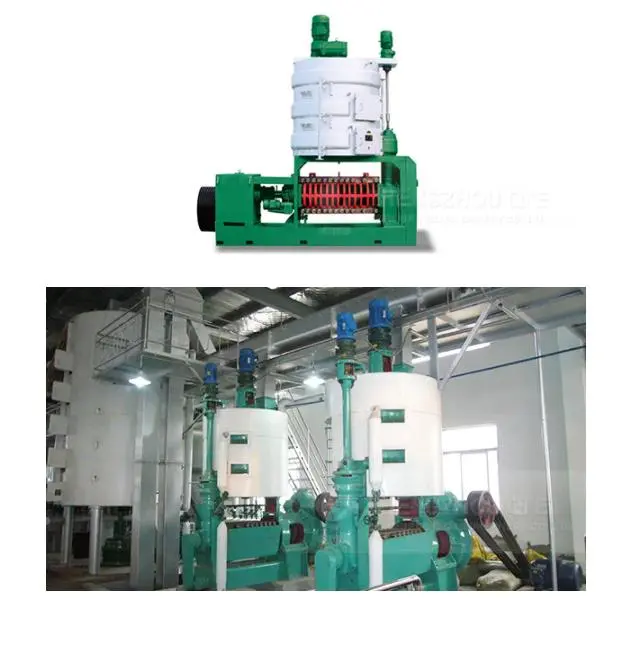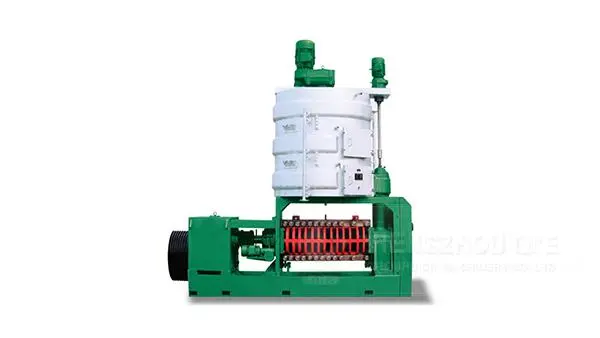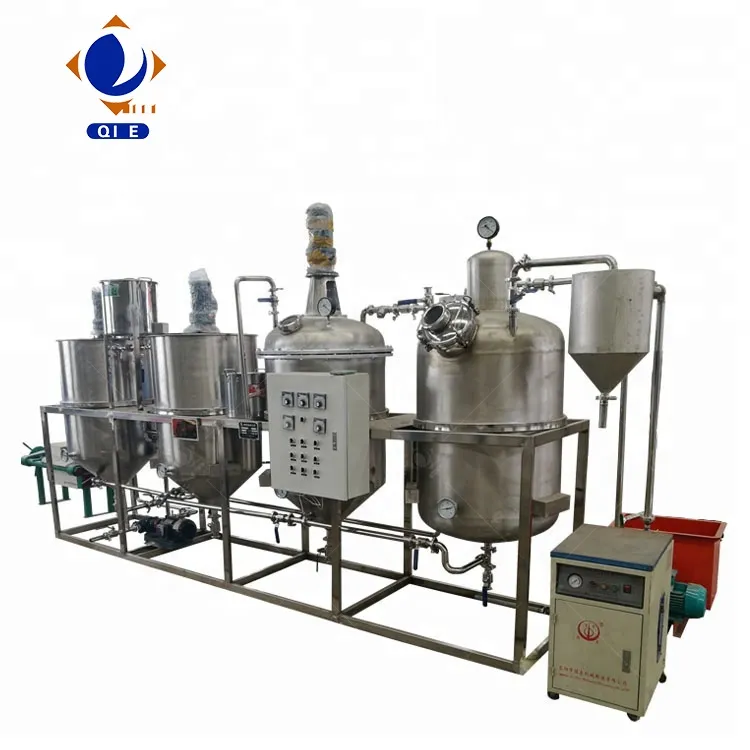
In the competitive edible oil industry, achieving consistent quality while optimizing production efficiency remains a significant challenge for small and medium-sized oil mills. This comprehensive guide explores the critical parameters in peanut oil refining, offering practical solutions to common processing challenges that affect oil color, flavor, and stability.
Peanut oil refining is a sophisticated process that transforms crude oil into a high-quality edible product through four essential stages: degumming, deacidification, decolorization, and deodorization. Each stage requires precise control of parameters to meet international standards such as ISO 665:2020 and GB/T 1534-2017.
Industry Insight: "Modern refining systems can increase oil yield by 3-5% while reducing processing time by up to 20% when critical parameters are properly optimized," notes Dr. Michael Chen, Food Processing Specialist at the International Edible Oil Institute.
Degumming removes phospholipids and胶质 impurities that affect oil stability. Optimal conditions involve maintaining a temperature range of 60-75°C with a water addition of 1-3% of oil weight. The mixing speed should be controlled between 60-100 RPM for 20-30 minutes to ensure complete hydration of gum particles.
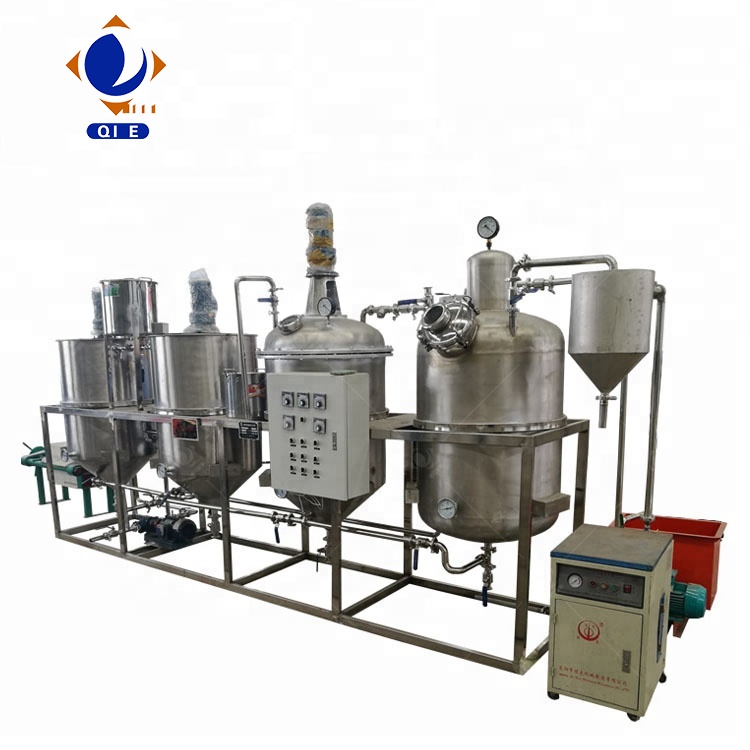
Many small-scale processors struggle with incomplete degumming, leading to downstream processing issues. The key is maintaining consistent temperature throughout the process and proper separation time in the centrifuge – typically 30-45 minutes at 6000-8000 G-force.
Deacidification reduces free fatty acids (FFA) to acceptable levels below 0.15% for premium edible oil. The alkali refining method uses sodium hydroxide solution (0.5-2.0% concentration) at 55-70°C. The reaction time and stirring intensity directly impact neutralization efficiency and soap formation.
| FFA Content | NaOH Concentration | Optimal Temperature |
|---|---|---|
| <1.0% | 0.5-1.0% | 55-60°C |
| 1.0-3.0% | 1.0-1.5% | 60-65°C |
| >3.0% | 1.5-2.0% | 65-70°C |
Decolorization removes pigments and trace contaminants using activated clay or carbon. The process requires precise control of temperature (105-120°C), vacuum pressure (50-100 mbar), and adsorbent dosage (1-3% of oil weight). Contact time should be maintained between 20-40 minutes for optimal results.

Troubleshooting Tip:
Excessive color in refined oil often results from insufficient vacuum during decolorization. Maintain pressure below 100 mbar to prevent oxidation and ensure proper pigment adsorption. Regular testing of clay activity is also essential – replace adsorbents when decolorization efficiency drops below 85%.
The final deodorization stage removes volatile compounds that cause off-flavors. Operating parameters include high temperature (220-260°C), high vacuum (0.5-3 mbar), and steam injection rate (5-15% of oil weight). Processing time typically ranges from 60-120 minutes depending on the desired flavor profile.
Modern deodorization systems incorporate countercurrent steam flow and efficient heat recovery, reducing energy consumption by up to 30% compared to traditional systems. This is particularly important for small and medium-sized facilities looking to improve profitability.
Many small-scale processors still rely on manual operations, leading to inconsistent product quality and higher production costs. Automated control systems can significantly improve process stability by maintaining precise parameter control and reducing human error.
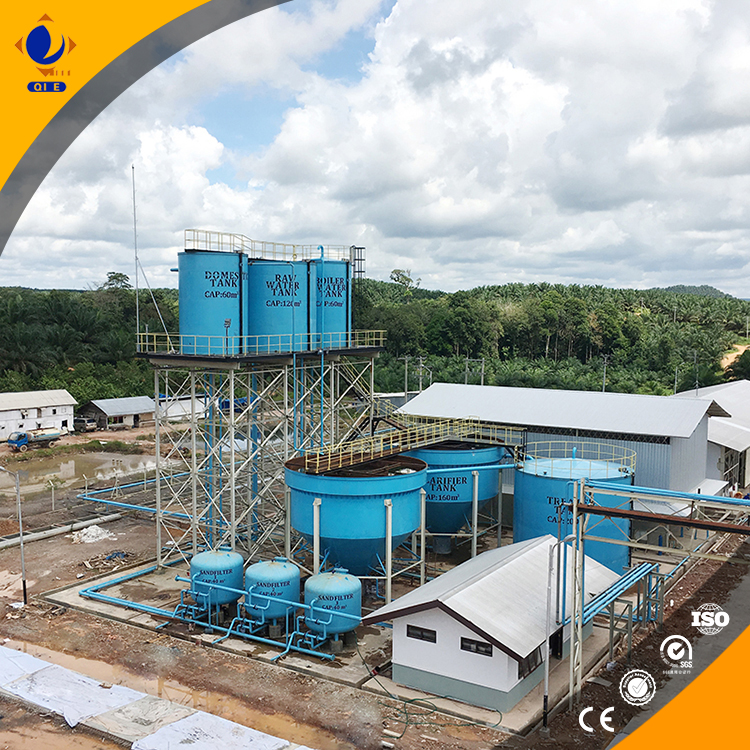
Penguin Group's fully automatic refining systems have helped hundreds of customers achieve consistent oil quality while increasing production efficiency. These systems integrate PLC control with touchscreen interfaces, allowing operators to monitor and adjust all critical parameters in real-time.
Is your oil mill struggling with inconsistent quality, low yield, or high production costs? Discover how optimized refining parameters and automation can transform your operation.
Get Your Custom Refining SolutionThe implementation of proper refining parameters not only improves oil quality but also extends shelf life and enhances marketability. By focusing on these critical control points and leveraging modern automation technology, even small and medium-sized oil mills can compete effectively in the global edible oil market.
Your Oil Mill Assessment:
Addressing these common challenges requires a systematic approach to process optimization and potentially upgrading to more advanced equipment. The investment in proper refining technology typically yields ROI within 12-18 months through improved yield, better product quality, and reduced operating costs.
 soybean oil refining equipment
modular oil refinery plant
automatic oil refining control system
refined soybean oil quality monitoring
equipment installation and commissioning
peanut oil yield improvement
cold and hot pressing technology
peanut oil processing parameters
oil pressing efficiency
peanut oil quality
sunflower oil purification
centrifugal oil purifier
centrifugal separation technology
oil purity improvement
production efficiency optimization
cold press peanut oil
hot press peanut oil
peanut oil yield
peanut oil nutrition preservation
peanut oil processing technology
sunflower oil impurity removal
centrifugal purifier operation
sunflower oil processing
edible oil purification technology
food-grade centrifugal separator
soybean oil refining equipment
modular oil refinery plant
automatic oil refining control system
refined soybean oil quality monitoring
equipment installation and commissioning
peanut oil yield improvement
cold and hot pressing technology
peanut oil processing parameters
oil pressing efficiency
peanut oil quality
sunflower oil purification
centrifugal oil purifier
centrifugal separation technology
oil purity improvement
production efficiency optimization
cold press peanut oil
hot press peanut oil
peanut oil yield
peanut oil nutrition preservation
peanut oil processing technology
sunflower oil impurity removal
centrifugal purifier operation
sunflower oil processing
edible oil purification technology
food-grade centrifugal separator





.png?x-oss-process=image/resize,h_100,m_lfit/format,webp)
.png?x-oss-process=image/resize,h_100,m_lfit/format,webp)
.png?x-oss-process=image/resize,h_100,m_lfit/format,webp)



.jpg?x-oss-process=image/resize,h_800,m_lfit/format,webp)